



In this blog community member Aurora Todisco talks about the relevance of strategic frameworks for co-production and how they can be used to help evidence and progress projects. If you would like to find out more about any of these frameworks, or see visual examples of how they work, we have included links at the bottom of the blog.
Co-production is often described as values-led, relational, and rooted in shared power. While this is right, it can sometimes make co-production feel difficult to evidence, evaluate, or explain — particularly when working within systems that rely on plans, strategies, and funding applications.
Drawing on my experience of co-production in health and social care, including working alongside people with lived experience, practitioners, and commissioners, I’ve seen how these tensions play out in practice.
Through my work across health and social care, I’ve found that strategic frameworks, when used thoughtfully, can support co-production rather than undermine it. By strategic frameworks, I mean structured tools or models that help teams think, plan, and make decisions — such as frameworks used for analysis, planning, project management, governance, or evaluation. They don’t replace relationships or trust, but they can help teams reflect, make decisions transparent, and articulate impact in ways that organisations and funders understand.
Below are six commonly used frameworks, and some of my reflections on how they can be adapted specifically for co-production.
Strategic frameworks
SWOT Analysis – understanding readiness for co-production
A SWOT analysis (Strengths, Weaknesses, Opportunities, Threats) is often one of the first tools that teams encounter. It is a simple, structured tool used to explore internal strengths and weaknesses within a project or organisation, alongside external opportunities and threats that may influence it.
In co-production, its value lies in creating a shared, honest conversation about the conditions needed for partnership working.
Used collaboratively, SWOT can surface questions such as:
- What strengths do we already bring as a partnership?
- Where do power imbalances or resource gaps exist?
- What external opportunities could strengthen co-production?
- What risks might undermine trust or sustainability?
The process of doing a SWOT analysis often matters more than the matrix itself. Considerations such as who is in the room, whose voice is prioritised, and how openly weaknesses are discussed can be an key factor in how useful they are. For example, this might involve completing a SWOT analysis in a mixed group of practitioners, people with lived experience, and decision-makers, using facilitated discussion rather than a pre-filled template, and explicitly inviting reflections on power, resources, and constraints before agreeing any actions.
PESTLE analysis – locating co-production within the wider system
A PESTLE analysis (Political, Economic, Social, Technological, Legal and Environmental) helps teams look beyond their immediate project and consider the wider political, economic, social, technological, legal, and environmental context. A PESTLE analysis is a strategic tool used to explore the wider context influencing a piece of work by considering political, economic, social, technological, legal and environmental factors. It is often used to help teams understand external influences and constraints when planning or reviewing initiatives.
For co-production, this can be particularly useful in recognising that success is not only shaped by internal practice, but by:
- Policy priorities and commissioning environments
- Funding constraints and payment mechanisms
- Digital access and exclusion
- Legal or safeguarding requirements
Using a PESTLE analysis collectively can help partners understand systemic barriers and avoid placing responsibility for challenges on individuals or communities.
SOAR analysis– strengths-based visioning
A SOAR analysis (Strengths, Opportunities, Aspirations, Results) is a strengths-based planning framework that supports teams to build a shared vision by focusing on what is working well, what is possible, and what outcomes matter most, rather than starting from problems or deficits.
In co-production settings, a SOAR analysis can:
- Centre lived experience as a strength
- Support shared aspiration-setting
- Help define what “success” looks like from multiple perspectives
This can be particularly powerful when working with communities who have experienced repeated consultation without change.- As it shifts the focus away from identifying problems for organisations to fix towards shared aspirations, existing strengths, and what meaningful success would look like from the community’s perspective. This can help rebuild trust and signal that participation is intended to lead to action, not just input.
RACI matrix – making power visible
A RACI matrix (Responsible, Accountable, Consulted, Informed) is often seen as a technical project management tool, but in co-production it can be a way of making power explicit. The RACI matrix is a role-clarification framework used to map who is Responsible, Accountable, Consulted, and Informed for different tasks or decisions within a piece of work. It is commonly used to support clarity, co-ordination, and decision-making in projects and programmes.
Mapping roles together allows teams to ask:
- Who really makes decisions?
- Where does lived experience hold responsibility or accountability?
- Where are people only being informed rather than involved?
Although the language of Responsible, Accountable, Consulted, Informed can feel quite hierarchical in the co-production context, used well, a RACI matrix can help prevent tokenism and support more transparent governance arrangements. For example, teams can use it as an initial stock-take of where different stakeholders currently sit (such as being informed or consulted), and then revisit it to map where they would like people to be — for instance, moving lived experience partners from “informed” to “responsible” roles — making clear what needs to change to enable this. This can be helpful in projects attempting to do co-production as it visually shows how much involvement people with living or lived experience have. So could be used as evidence to help ensure they are given equal responsibility.
SMART goals – translating shared intent into action
SMART (Specific, Measurable, Achievable, Realistic, and Time-bound — sometimes referred to as Timely or Target-based) goals help turn values and intentions into concrete commitments. In practice, the difference between SMART and non-SMART goals is clarity and accountability.
For example, a non-SMART goal might be:
“We will improve how people are involved”
Whereas a SMART goal could be:
“By September 2026, we will co-produce and test a new involvement process with at least ten people with lived experience, agreeing roles, payment, and decision-making responsibilities, and review its impact after three months.”
The latter makes expectations, timescales, and responsibility visible, while still allowing the work itself to be shaped through co-production.
In co-production, co-creating SMART goals can:
- Clarify what will happen
- Support accountability on all sides
- Make progress and impact more visible over time
Importantly, “achievable” and “relevant” should be defined collectively, not imposed. In co-production, this means agreeing together what feels realistic, meaningful, and worthwhile, taking into account people’s time, energy, resources, and lived realities. — Rather than having feasibility or relevance determined solely by organisational priorities or constraints.
Theory of Change – articulating how co-production creates impact
Theory of Change is particularly well aligned with co-production because it focuses on how change happens, not just what happens.
A Theory of Change is a structured approach to articulating how and why change is expected to happen, by mapping the relationships between activities, assumptions, outcomes, and longer-term impact. It is commonly used in programme design and evaluation to make underlying assumptions explicit and to support learning over time.
Co-produced theories of change can:
- Capture lived experience as an input to change
- Make assumptions explicit
- Provide a shared framework for evaluation and learning
They can also be invaluable when explaining the value of co-production to funders and decision-makers.
How to best harness these strategic tools for co-production
Even though these strategic frameworks were created for project management purposes and are predominantly used within business and organisational settings and perhaps on the surface don’t all feel like they are a good fit with co-production. I believe that when they are applied collaboratively, with attention to power, accessibility, and relationships, they can become useful tools for reflection, learning, and sustainability. For me, the question is not whether co-production should use strategic tools, but how we adapt those tools, so that they serve co-production values rather than dilute them.
Further reading
If you would like to know more about these strategic frameworks here are some links to some simple explanations written for those using them in a project management and business context, which is where they originated, and why most of them are on commercial websites.
About Aurora
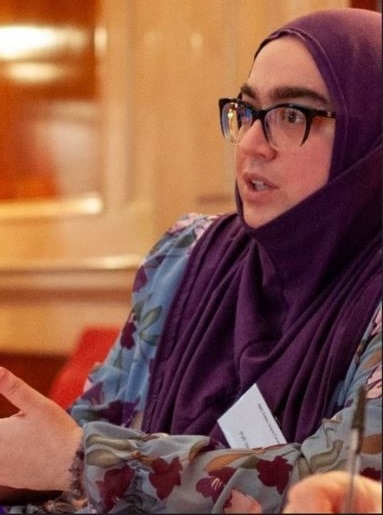
Aurora Todisco a Co-Production Collective community member, winner of the Advocacy and Patient Experience Champion Award at the National B.A.M.E. Health & Care Awards 2025. She is a Finance, HR, and Governance Development Lead with over 21 years of experience, including the past 9 years dedicated to the health and social care sector. She brings a unique blend of strategic expertise and lived experience to her work, with a strong focus on improving patient safety, health equity and quality of care. Aurora holds a Postgraduate Diploma in Advanced Primary Care Management, which informs her systems-level approach to healthcare leadership. Since 2021, she has co-produced initiatives with nearly 90 national stakeholders, driving forward accessibility inclusion, and trauma-informed practice across NHS, academic and research settings. Actively involved in quality improvement programmes, accreditation panels and advisory groups, Aurora is passionate about amplifying patient and public voices to shape meaningful, system-wide change. Her work champions the power of real patient stories in creating campaigns that lead to safer, more equitable care for all.
Photo Credit: Fleur from Unsplash
Meeting notes
Other news you might be interested in

The transformative journey through Co-Production from the inside out
In this blog team member, Siobhan mentions her challenging lived experiences, describes her involvement in the Measuring Success Programme and explains what happens when we stop looking at life through the lens of our story and co-produce by simply being our authentic selves.

Co-creating arts-based tools with children for mental health and resilience
This blog discusses the Nkwihoreze project in Rwanda, where children and young people co-create culturally appropriate tools and resources to facilitate intergenerational dialogue and provide psychosocial support to families affected by the 1994 Genocide Against the Tutsi.

Diving in: Reflections on evaluating ourselves
With our eight Measuring Success in Co-production project teams onboard and their projects under way, members of the Measuring Success in Co-production co-ordinating team share their experiences of working together to evaluate their own co-production approaches.

Co-designing peer support resources for neurodivergent young people
In this blog Charlotte Webber shares what she sees as the difference between co-design and co-production from her experience of being involved in the Neurodivergent Peer Support Toolkit (NEST) project.
.jpeg)
Multicultural Co-production: the Amar Bari, Amar Jibon (My Home, My Life) partnership
In this blog the team behind the “Amar Bari Amar Jibon” (My Home, My Life) research study, share insights and reflections on how to do effective co-production in a multicultural context

Navigating Anti-Racism and Co-production: Our Journey and Reflections
In this blog Isaac Samuels shares their reflections from hearing the challenges faced by those from racialised backgrounds and global majority communities within co-production spaces.

Co-Production and Commissioning
Co-Production Collective Community member, and ex-staff team member Chloe talks about the role of co-production in commissioning from her experience of becoming a Commissioner.

Walking in your footsteps: Exploring co-production involving creative workshops
In this blog Briony Campbell shares her perspective on co-production as an artist/researcher who co-produces projects which involve creative workshops as well as some tips she has learned over the years.

What we have learnt from co-producing our Allies Group recruitment process
This blog discusses how we worked to make the recruitment process fair and open for everyone. It talks about what we did well, what we could do better next time, and how our efforts are helping to bring more diversity and engagement to the community.

How to best engage the public to participate in collaborative projects
Co-Production Collective co-producer Yesmin shares what she has learnt about how to best engage the public to participate in collaborative projects whatever form they take or whoever they are with