


.png)
Many older people discover co-production as a new way of contributing to the workplace following retirement. What are their experiences of this phenomenon, which is quickly becoming normal practice within several organisations, charities and in research projects?
Hi I’m Erica a freelance poet and author of a collection of poems called ‘Searching for an Oasis and Beginning to Grow’. I began to get involved in co -production five years ago when my 40-year career in managing health and care services across England and Northern Ireland ended abruptly. Since then, I have been involved in a wide range of co-production projects across a variety of sectors.

My involvement in co-production, like many older co-producers I meet is heavily influenced by my previous career. One distinguishing memory that l cherish from that time is of Lily, who came to residential care when she was 102. When we celebrated her one hundred and third birthday, we were determined to make a day of it, so invited local school children to put on a performance for her and other residents. During the serving of well-earned refreshments, these children clambered around Lily eagerly asking her questions such as:
"Do you know about the second world war?”
She replied instantly:
“l was born on the day the Titanic ship went down, and l lived through the first AND the second world war."
The children’s eyes gleamed with surprise and amazement as Lily recounted countless stories of that period to them. Lily also enjoyed the experience and said to us “What a treat it was to talk with the children.”
Later, we received a thank you note from their teacher who described how the children’s projects on the second world war had become sprinkled with the memories that Lily had shared. They had clearly valued and were spellbound by the recounting of her personal experiences. She felt appreciated and the children’s project on a subject that had previously been a distant idea - relegated to history books, had developed and become transformed into something meaningful and current to them. This was evidenced and supported by the lived experiences that Lily had shared.
To me this story from my days working as a General Manager exemplifies the power of what co-production can do. Its impact is in involving and connecting people, benefiting all individuals. As a result of co-production our projects and research become meaningful, adaptable and current to all of us.
Some issues that may affect full participation of older co- producers
Since that day with Lily, l have worked with charities, universities and researchers on a number of co-production projects. Unfortunately, l have consistently witnessed what can only be described as a certain reticence from older co-producers who are involved (often despite the opportunities provided for all within the project), to contribute their ideas and insights. Certainly, during follow up informal discussions as well as those that l had when I was a peer researcher, older participants expressed: “Oh they didn’t want to hear THAT from ME " or “What (insert younger person) said was much more important/significant /relevant/ current.”
In my experience it is very rare that the most vocal contributors to a discussion or to a project are the older co-producers who are present in the room, as many downplay or do not recognise the value of what they have to contribute.
For the most part, it is easy to spot discomfort and a certain uneasiness in an unsettled older co -producer. This is evident by a lack of response to invitations to:’ Get Involved’ and can be observed as fidgeting in meetings. In my experience these behaviours can be misjudged as nervousness. However, they can also be an indication of a frustration at not feeling heard or of feeling disadvantaged or unable to contribute their skills and abilities to situations that they see displayed by other participants, in ways they may have been able to do in the past.
My recommendations for creating a more inclusive environment for older co-producers to be able to contribute to co-production in an equitable way to everyone else
- Those responsible for co-producing projects with older co-producers need to be aware that some may be reticent to contribute conversations. There also may be other barriers to communicating in a group, like hearing and visual impairments that need to be considered. That is why their contributions need to be actively encouraged in ways that work for them and are accessible to all.
- Ensuring that all co-producers are supported to use the technology used to be able to fully participate in co-production sessions. This could mean providing a tech team member to support people or ensuring that facilitators can capture people’s contributions in ways that are needed for the project. It could also mean offering a training session for those taking part to learn to use the technology before the project starts. This practice is essential for making co-production projects accessible to all and can be especially challenging for older co-producers. - Some of whom may not be used to using technology and apps like Microsoft Teams, Zoom, Miro boards etc that others may be used to using.
- Incorporating one-to-one and smaller group meetings, even setting up a specific group which recognises and accommodates slower and adapted approaches. This group can work alongside the core group, feeding back to them throughout the project. In this way a fuller participation for all is encouraged.
- Not assuming that because older co-producers can do that task because they have more time is essential to valuing their input.
How co-production projects are administered can affect the retention of older co-producers and what can be done to mitigate this.
During my five years’ experience on projects with older co-producers, l have known a large number who drop out of projects because they:
- felt angry about chasing remuneration not received
- find it difficult to do the administration required
- are aware that remuneration rates are different to others who are employed from external agencies
Close friends have confided: ”l just can’t chase the payment that l think that l am due.” To prevent these issues, I recommend that a separate billing and payment department for co-producers be put into place to speedily eradicate the possibility of dissatisfaction, confusion and consequent disenchantment of those participating.
How harnessing the knowledge and skills of older coproducers benefits both the co-production projects they are involved in and the individuals themselves.
I have been lucky enough to work with organisations that value the skills of older co-producers. For some people I know, this has meant being offered employment during their senior years. This has allowed them to reignite the skills of their former professions. In these cases, the organisation also benefits from escaping a prolonged and costly interview process by recruiting someone who they have already worked with on relevant projects.
Fellow co-producers have told me getting involved in co-production, during their retirement, has given them “a new lease of life.”
I believe that more can be done by organisations using older co-producers to enlist the skills and aptitudes developed from their former careers. - I have met many inspiring older people through being involved in co-production including a former Theatre Director, a global management consultant, a retail general manager and a PhD professor. We all arrive in co-production with histories and a variety of adaptable skills.
There is hope on the horizon for those organisations, companies and charities who can adapt how they co-produce to be equitable for all including older co-producers because they recognise and value how much they can enrich their projects.
As one of my retired co-production colleagues stated:” l spent all my working life as a social worker, now l use my skills to help others.”
Another Indian lady in her nineties who had retired from her health profession spoke to me about the need to support younger members of her community whose English language skills were not as fluent as her own. She did this by assuming the role of translator during projects, communicating their ideas and opinions in health service recommendations on improvements.
Essentially, like Lily, my fellow older co-producers and l echo this resounding affirmation:
“We are not done yet!”
Image Credits
lsolyn Donaldson-Ellison
Canva.
Meeting notes
Other news you might be interested in
Our 2024 Community Survey and how we’re acting on its recommendations
In this blog we share the results of our 2024 Community Survey and what we have been doing since then to put your recommendations in place.
How we co-produced an animation about ear checks for children and young people who are autistic and/or have a learning disability
In this blog we talk about the Ear Checks Programme Co-Production Collective have been supporting since 2021 and how we went about co-producing an animation to support children to understand and take part in ear checks in a way that works for them.
The value older co-producers can bring to co-production and how to support them
In this blog Erica shares her reflections from getting involved in co-production in later life and what more can be done to make it accessible and inclusive for older people.
.png)
January team update: Celebrating what we have achieved together in 2025 and looking forward to 2026
The latest news from the team and our community plus updates about our ongoing projects and upcoming opportunities.

People, meaning, impact and cake: A few thoughts on co-production
In this blog, Amy Wizard Ponter shares her thoughts on the key ingredients of co-production. Drawing on a huge range of experience across the co-production space. She has seen the good, the very bad and certainly some of the ‘delicious’ when it comes to co-production cake!
.png)
When experience becomes evidence: Co-producing mental health research
In this blog Kelvin Opiepie shares his personal journey from silent struggles to shaping global mental health research through his role as a member of The Global Lived Experiential Advisory Board (GLEAB) for The GALENOS project.
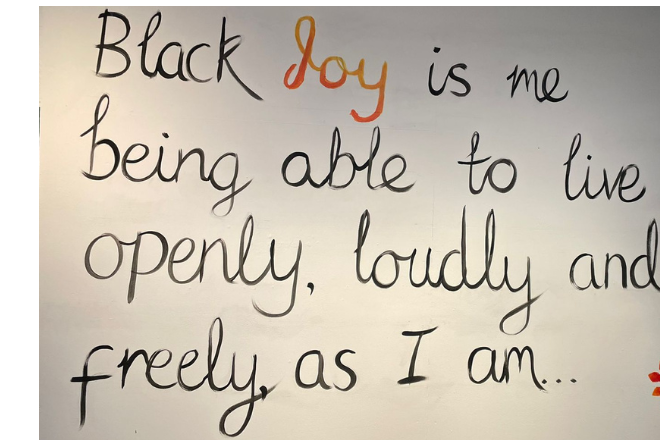
Celebrating Black History Month: Honoring the legacy and joy of Black communities
This Black History Month, Co-Production Collective wants to celebrate members of our community and some of the brilliant contributions and achievements they have made to our work.
.png)
From patient involvement to co-production: Reclaiming power in research and reproductive justice
In this blog Neelam Heera-Shergill founder of Cysters shares why she believes there is a need move beyond traditional patient public involvement and engagement into co-production in order to be inclusive, build meaningful relationships, share power and honour the realities of the communities she works with.
.png)
Race, power and alternative futures
In this blog co-producer Isaac, Hania & Nicc reflect on the recent far-right protest in London. A protest that was marked by anti-immigrant and Islamophobic rhetoric, and led by organisers known for anti-Muslim views. They highlight its impact on all racialised communities and call for solidarity, collective care, and action against rising hate and racism.

Sharing Power, Shaping Change: Lessons on Inclusive Co-Production in Sexual Health Research
In this blog co-producers Julion and Melvina reflect on creating culturally sensitive sexual health films with young people especially from Black Caribbean communities as part of the LUSTRUM2 research project and shares lessons for more equitable and community led research.