


.png)
About the Programme
Our collaboration with UCL Mental Health Science PhD students began in October 2020. Since then, each years six students have joined the course, which is generously funded by the Wellcome Trust. It offers an exciting opportunity for students to develop expertise in cutting-edge methods and techniques in mental health research, and involving people with lived experience in students’ research is one of the key priorities of the programme.
Since the start, Co-Production Collective has partnered with every cohort, delivering sessions that highlight the value of involving people with lived and living experience in research. These sessions also provide practical guidance on applying co-production principles in real-world projects.
Topics explored include
- The core values underpinning co-production
- The importance of sharing power and responsibility
- Accessibility consideration
- Strategies for embedding meaningful co-production principles in research projects
- Ensuring safety and understanding safeguarding in co-production spaces
- How to put co-production principles into practice
This year, we’re working with our fifth cohort and inviting you to support their PhD projects.
How you can get involved
Students are seeking individuals with lived or living experience of mental health challenges to join their thesis committees. These committees made up of researchers, mental health professionals, and people with lived experience (including family members or carers) - provide guidance and feedback throughout the three-year research journey.
Committee members help by:
- Reviewing written reports
- Advising on presentations
- Offering constructive feedback and support
Committees meet 5–10 times over the project timeline, and contributions are recorded in the student’s online Research Log. As a lived experience advisor, you won’t be asked to share personal stories during meetings.
Payment: £25 per hour (including up to one hour of preparation time per meeting). Claiming payment is optional.
The deadline for expressing interest in any of these roles is 17:00 (UK Time) on Monday 5 January 2026.
Keep reading to meet the fifth cohort of Mental Health Science PhD students and learn more about their projects—and how you can get involved!
A huge thank you to everyone who has supported the students over the past four years, and thanks in advance for your continued support this year.
Projects Mental Health PhD students would love your support with

Addressing Self Criticism with Nitrous Oxide
Alex is a PhD student researching whether a brief, supervised dose of nitrous oxide (laughing gas) combined with a guided exercise can help reduce self-criticism and promote more supportive self-talk in people who binge eat.
Alex is looking to recruit one person aged 18–50 with lived experience of an eating disorder such as binge eating disorder or bulimia nervosa.
Read more about this opportunity.

The impact of social safety nets on outcomes and inequalities in mental health
Anabelle is a PhD student researching how social safety nets (such as government benefits) influence mental health outcomes and inequalities. Her work aims to understand whether such programmes can improve mental health and reduce disparities across social groups.
Anabelle is looking to recruit two people aged 18+ who have both lived experience of mental health difficulties and received UK government benefits, to join her thesis committee as a lived experience advisor.
Read more about this opportunity.

Investigating the brain mechanisms underlying hallucinations
Luna is a PhD student studying the brain mechanisms behind impaired insight in individuals who experience hallucinations, which are subjective experiences that do not correspond to the external world.
Luna is looking to recruit two lived experience advisors aged 18+ who have experienced auditory and/or visual hallucinations (this can be people who know they are hallucinating or not) to join her thesis committee, which will meet online about every six months over three years.
Read more about this opportunity.
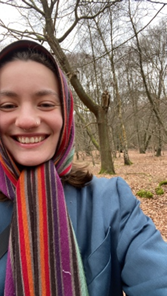
The effects of the menstrual cycle on psychedelics
Ros is a PhD student researching how phases of the menstrual cycle might interact with psychedelic drugs such as psilocybin (also known as “magic mushrooms”), to help inform how these treatments could be offered to help women with mental health problems like depression, anxiety and depression. Her work explores whether hormonal fluctuations, such as changes in oestrogen and progesterone, affect the subjective and therapeutic effects of psychedelic drugs, which could help tailor psychedelic therapies for women.
Ros is looking to recruit two lived experience advisors aged 18+ who either have experience with psychedelic drugs in a therapeutic setting (e.g., retreats) and/or experience severe pre-menstrual symptoms to join her thesis committee. Members will meet online 6–10 times over three years to provide input on study design, recruitment, interpretation of results, and dissemination.
Read more about this opportunity.

Identifying Treatment for Anhedonia
Shalini is a PhD student at UCL researching treatments for anhedonia, which is the reduced ability to feel pleasure or interest in activities people usually enjoy. Her work uses large-scale genetic data to identify the role of genes that increase the risk of Anhedonia, explore drug repurposing, and develop personalised medicine approaches to improve treatment outcomes for people with depression and related conditions.
Shalini is looking to recruit up to two lived experience advisors aged 18+ who have personal experience of depression and symptoms of anhedonia to join her thesis committee. Members will help shape the research, review accessible materials, and provide input on interpreting results and dissemination.
Read more about this opportunity.

Exploring the Mechanisms and Pathways Contributing to Dementia in Parkinson’s Disease
Steve is a PhD student researching dementia in Parkinson’s disease, focusing on why some people with Parkinson’s develop dementia while others do not. His project combines analysis of large datasets (including brain imaging and biological data) with laboratory studies using stem cells and animal models, in order to understand the brain circuits involved, and inform better treatments for cognitive symptoms such as difficulties with memory and concentration.
Steve is looking to recruit a lived experience advisor aged 50+ with a Parkinson’s diagnosis to join his thesis committee. The role involves attending around five online meetings over three years, reviewing project updates, and sharing insights to guide the research.
Read more about this opportunity.
Image credit - Canva.
Meeting notes
Other news you might be interested in

Measuring Success in Co-production: Learning by Doing Launch Event follow up and what comes next
In this blog we share recordings from the launch event and responses to questions asked. We also provide details about our upcoming ‘Networking, connection and development workshop’ as well as opportunities for additional funding.

The how, what, and when of applying to our programme & funding opportunity! Measuring Success in Co-production: Learning by Doing
Providing vital information about how to apply for our Measuring Success in Co-Production - Learning by Doing programme

Measuring Success in Co-Production: Learning by Doing - Frequently Asked Questions (FAQs)
Our frequently asked questions in relation to the Measuring Success in Co-production : Learning by Doing programme application process

Revisiting our core values
An update on the discussions from our session on 27 July where we discussed our core values and whether they are still suitable. Have a read to find out how you can get involved in shaping these values and our new strategy.

'Measuring Success in Co-production: Learning by Doing' - funding available soon!
Get ready for our new funding pot, available soon from the ‘Measuring Success in Co-production: Learning by Doing‘ project!

Help shape Co-Production Collective’s communications - Join our sub group
Find out more about more about our plans for a new Co-Production Collective Communications sub group and how to apply to be part of it.

Key findings and recommendations from our end of year survey
Provides an overview of the findings from our end of year survey, the recommendations that came out of it and the commitments we have made so far as a result

Co-creating ‘Our Direction’ 2.0, our new strategy
An overview of what was discussed at our last strategy development session on 22 March and how you can get involved in our next session on 23 May.

The latest cohort of Mental Health Science PhD students would love you to get involved with their research
In this blog you will meet the latest cohort of Mental Health Science PhD students Co-Production Collective are training, find about the projects they are working on and how you get involved to support them.

What would it mean for Co-Production Collective to be an anti-racist community?
A group of us got together recently to talk about racism and how Co-Production Collective could start to have a conversation about what being an anti-racist community really means